The Olympus D-390: The Camera That Started It All
Before mirrorless cameras. Before full-frame sensors. Before debating autofocus tracking, dynamic range, megapixels, and whether a lens is “sharp enough.”
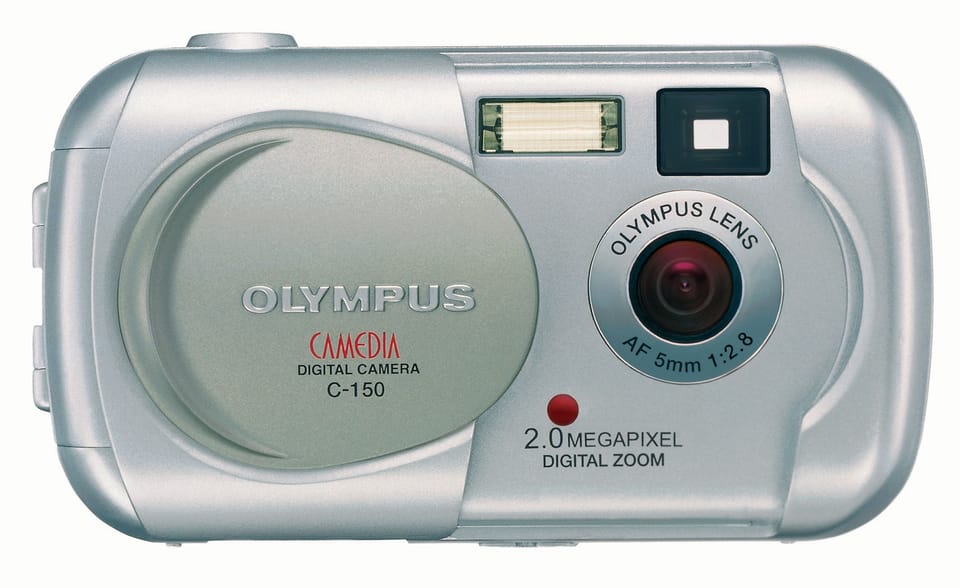
There was the Olympus D-390 (also known as the C-150 in some markets).
My first digital camera.
Looking back at the specifications now is almost amusing. A 2.0-megapixel sensor. A tiny LCD screen. A fixed lens. Storage on an xD-Picture Card; a format that feels like it belongs in a museum today. It was slow, limited, and by modern standards, completely outclassed by even the cheapest smartphone.
And yet, it was magical.
The D-390 was my first taste of what digital photography could be. No more waiting to finish a roll of film. No more wondering if the picture turned out. You could take a photo, look at it immediately, and try again.
That simple feedback loop was revolutionary.
It made photography feel accessible.
You didn’t need a darkroom. You didn’t need expensive film. You didn’t need to carefully ration every exposure. You could experiment.
Take a picture. Look at it. Learn.
That little Olympus was the camera that started the journey.
Years later, here I am with a Sony A7 IV, beautiful lenses, and a camera system that is objectively from another universe compared to the D-390. The amount of technology packed into modern cameras is almost ridiculous. My phone probably has more computing power than that entire Olympus ever did.
But sometimes I think about that little camera sitting in a drawer.
And now I’m wondering if it might have a second life.
My son has started doing what so many kids do today: grabbing our phones and taking pictures of everything. Absolutely everything.
The floor.
A random toy.
A blurry picture of a wall.
A sequence of 47 nearly identical photos because apparently the moment required extensive documentation.
And before I know it, our iCloud storage is slowly filling up with what can generously be described as “creative exploration.”
Maybe that’s actually a good thing.
Maybe this is the perfect time to introduce him to photography properly.
Instead of handing him a phone where the camera does almost everything automatically, what if he used a real camera? A camera where he has to think about where he points it. A camera where he has to decide what is interesting. A camera where every photo feels intentional.
The Olympus D-390 might be the perfect teaching tool.
It’s simple.
It has limitations.
And maybe those limitations are exactly what make it valuable.
Modern smartphones are incredible because they remove obstacles. Computational photography fixes exposure, balances colours, sharpens details, and creates images that look great with almost no effort.
The D-390 does none of that.
It just takes a picture.
The photographer has to do the rest.
Of course, there is one small problem.
The xD card.
Somewhere along the way, the entire world moved on from xD-Picture Cards. SD cards became the standard, and xD became another forgotten piece of technology history.
So before my son can start his photography journey, I’ll need to find an xD card reader. A funny little reminder that sometimes the hardest part of using old technology isn’t the technology itself ... it’s finding the accessories that disappeared twenty years ago.
But maybe that’s part of the charm.
There is something satisfying about bringing old gear back to life.
That little Olympus D-390 was once my introduction to photography. It helped create a hobby that eventually led me to interchangeable lenses, mirrorless cameras, and far too many hours watching camera reviews.
Maybe now it can introduce someone else.
Maybe my son won’t care that it only has two megapixels.
Maybe he’ll just think it’s cool that Dad has an old camera that takes pictures.
And maybe, just maybe, those photos filling up our iCloud storage might become a little more thoughtful.
Even if some of them are still pictures of toys and the floor.